Showing posts with label police. Show all posts

Tuesday, April 13, 2010

Bolivia: Why doesn't this surprise me?

Let's just start with a plain fact: Police corruption is rife all over South America. That needs to be said out loud, no matter what country and no matter what denials or excuses are wheeled out by politicos, police chiefs and what-have-you. Part of the problem is the simple deal of paying a low salary to somebody who can legally walk round town with a gun strapped to their hip and wide-ranging powers to make other people's lives difficult, but another significant part is that many people join police forces in South America because they know they'll be able to get "two salaries" (as the phrase goes round this way), with the unofficial one much higher than the official one.

Despite that, I'm often impressed (for want of a better word) by the new and inventive ways cops find to add to their take-home pay. Here's a novel variant reported by AP, brought to light thanks to that good Bolivian resource, Boliviasol (my translation). Just another day in paradise, folks:


The Bolivian government has suspended the licenses of two private clinics that allegedly have illegal agreements with police officers so that police bring them road accident victims, according to government minister Sacha Llorenti.

The minister said during a press conference that 10 police officers are being investigated in La Pax and its neighbouring city, El Alto.

Llorenti mentioned three recent accidents in which the injured passengers were not taken to the nearest clinic as required by the law, but to other more distant clinics because it is suspected that they paid the police officers.

In one of the cases, one of the injured died before reaching the hosipital. The police that attended the injured person drove four kilometres in in an hour of high traffic density to take the person to a clinic when there was another medical centre close at hand.

"There are people profiting from the pain of others", said police commander Oscar Nina at the same press conference. The case has been sent ot the public prosecutor and the investigation may result in the definitive suspension of the clinics involved.

Saturday, February 6, 2010

Your Tax Bolivares Fuertes at Work

Thanks due to reader 'S' for the link-o to this report out of Correo de Caroní today.


Police in the Bolivar State region of Venezuela were yesterday proudly showing off their latest acquisitions, namely five Toyota Hi-Lux patrol cars (list price without the policial add-ons of 158,251 Bolivares Fuertes (VEF) each) by parading them in caravan style along the local highway for everyone to see. They get to just outside the local ironworks and the lead car suddenly notices a speed control bump (aka sleeping policeman) in the road and slams on the brakes. The result of the sharp braking was that all five vehicles managed to do a good impression of an accordion, causing "considerable damage" to all five.

Adding insult to injury and in true Police Academy style, the regional police bigwig, General César Fuentes Manzulli, was present to watch the parade and was standing at attention at the very spot were the multiple pile-up happened. According to the report (and I'm going to translate this bit directly cos it's so cool) the General "showed signs of great annoyance on seeing the magnitude of the accident and the results of the same".

Something Special 18 Year Old Single Malts served, the end.

Wednesday, December 9, 2009

How do you say "Don't Tase Me Dude" in Spanish?

It had to be Colombia, didn't it? A nice catch by RB over at Ten Percent sees the Colombian Police Force opting out of their usual "control devices" (e.g. thumbscrews, spare FARC uniforms to slip on innocent victims, unmarked graves) and going all thoroughly modern on the world:

(FinancialWire) Taser International, Inc. (NASDAQ: TASR), a market leader in digital evidence solutions and electronic control devices, announced an order from the Colombian National Police for 140 Taser(R) X26 ECDs and related accessories. The contract was placed with Tasers exclusive distributor, Eagle Commercial, S.A. in Colombia.

Now you know how Uribe can guarantee a decent turnout on election day next year.

Mojitos served. The end.

Thursday, June 11, 2009

Bagua: "(The police) answered that they had orders to kill us"

Photo of the three interviewed indigenous
(stolen shamelessly from La Republica)

This report in Peru's La Republica gives more insight into what happened on the morning of the 5th at 'Curva de Diablo, Bagua. The reporter interviews three of the indigenous protestors injured in the attack. Note that these are not the ignorant, savage, second -lass citizens that Twobreakfasts wants to spin but ex-members of Peru's armed forces. These witnesses are, in my view at least, eloquent, reasonable and sane. They're also eyewitnesses to blatant violations of human rights.

xxxxxxxxxxxxxxxxxxxxxxxxxxxxxxxxxxxxxxxxxxxxxxxxxxxxxxxxxxxxxxxxxxxx

Natives and Police agreed to talks at 10am, but at 6am the police attacked

María Elena Hidalgo, special envoy in Bagua

Three indigenous that served in the Peruvian army are interned in the Hospital Gustavo Lanatta Luján, en Bagua Chica. The honorably discharged soldiers were attacked by police when they protested for the lands.

Roger Petsa Najamtai, 30, from the community of Santiago in the district of Belén, went to the site of the strike via boat along with 29 other members of his community.

"The day before the attack we talked with the Police General Víctor Uribe to make it clear that the problem was not with the police but with the government", explaind Petsa. "The police told us that there was no problem with us and that the next day at 10am we would continue talks. But at 6am the police started the attack on us including from a helicopter that fired bullets like rain. The police shot us directly in the body. I saw how my colleagues fell while I started running for cover. Two bullets hit me and I fell. I got out on a motorbike, helped by a friend. The police shot at the motorbike but I managed to get to the hospital".

Roger Petsa Najamtai, 22, is from the community of Iracuza in the district of Nieva. He joined the protest to represent his townspeople.

"We were in a peaceful protest and talking constantly with the police in order to avoid problems. It's true that we blocked the road but we allowed passengers to cross by foot witout any problem" explained Ukuncham. "On Friday at 6am around 1,000 police approached us and started to clear the road by shooting. We only had lances and sticks but they started shooting at our bodies. I didn't understand why they were shooting at me as I was also a Peruvian and the only thing we were doing was to protest for our lands. As I am an ex-soldier with honourable discharge I approached (the police) to ask them the motive and they answered that they had orders to kill us, then I was hit by two bullets in the arm."

Paul was one of the first to be evacuated from the zone and taken to hospital. The version of the indigenous is completely different to the official story of the events.

Camped in Bagua for one month
"We travelled from my community for one week to be part of the strike and the calim our rights in a peaceful way" said Paulo Bitap López, native of the Shushug community in the district of Chiriaco who travelled along with 70 other natives to Bagua Chica. They were there for a month. "No NGO gave us food. The families in the zone helped us with food for a month" he said.

"No politician has manipulated us. The indigenous people has its own worldview and part of that is the defence of land and water. When the police started to shoot, I asked my friends who are also honourably discharged members of the army to go and talk. But when we approached they shot us. They injured me and took my friends away." Paulo Bitap was hit by a bullet in his left shoulder.

Monday, June 8, 2009

Peru's next protest flashpoint

This map (click to enlarge, but it gets big) shows the place on the roads of San Martin Department, norther Peru, where indigenous protestors have been blocking three sections of highway for the last 20 days.

Suddenly, according the reports, some 600 police officers have turned up at on the scene and "asked" the blockaders for a temporary respite in their protest to allow the tailbacks of trucks to get through. It seems this temporary deal has been agreed upon by locals, but the police have said that they will try to stop the protests from restarting "in the next 24 to 48 hours".

Seemingly, Twobreakfasts isn't happy with the blood of 50 dead people on his hands and is going for more. Does he seriously think that he's going to attract foreign investment to the area by cracking open the heads of the people oil companies must be friendly with once exploration starts? Pass me the crazy pills........

Friday, June 5, 2009

Peru: indigenous vs gov't and oil: The killing begins


It was one of those things I didn't want to say out loud, but the whole Peruvian Amazonas state of emergency and protests against the laws that Twobreakfasts has tried to force through in order to develop the Amazon basin oil business looked like spiralling out of control at any given moment.

That moment came today. In Bagua Grande Amazonas, at a place called "Curva del Diablo", indigenous protestors have blocked the main highway for the last 10 days. This morning police moved into break up the roadblock. The toll left after the confrontation is four dead police officers, one dead indigenous leader and 20 injured. UPDATE: It's getting worse. Authorities are now reporting between seven and ten dead police, two dead civilians and local health services "are collapsing" under the number of injured. UPDATE 2: It's getting worse and worse. Unofficial numbers now talk about twenty-five civilian deaths. This number is as yet unconfirmed, but even if it's half that number we're looking at a true bloodbath. Also, reports talk of government and APRA party building being burned and running battles in the town centre of Bagua Grande.
Points to make:

  • My sincere condolences go out to the families of the police officers. They were basically ordered into battle this morning by superiors that knew there would be casualties.
  • These indigenous are not messing about. This is not some sort of posture. They will kill and kill again to protect their lands, be in no doubt. And before you try to pigeonhole them, they're not a band of ignorants; these people know both sides of the argument but the need to safeguard the land is an ancient cultural calling. They are willing to die if necessary to protect the area from forced development.
  • They are also extremely efficient fighters. Seriously, you don't mess with these dudes, even with an AK-47 in your hands and body armour on your chest.

All this came after a pathetic scene in Peru's parliament this week when the chamber was about to vote down the controversial law, the so-called 1090 decree, (the so-called "law of the jungle") when suddenly the APRA members threw a faked hissyfit and stormed out of the building, thus stopping the final vote. The locals shouldn't kill police? Of course. Police shouldn't have been ordered in? Of course. Leaders in The Republic of Lima have just used the bodies of four police officers as cannonfodder and an excuse to send in the army? Yes, that as well.

This cannot end well. It's all very, very sad.

Thursday, May 14, 2009

Peru = Block


It's the only keyword you need.

Peru plans to block homosexuals from its police force. It will also bar anyone caught having an extramarital affair. The reason for both groups beng barred is so as not to "damage the institution". Hopefully these new laws will only apply to new recruits and not existing officers, as your humble correspondent wouldn't like to see 30% of the country's police out of a job so quickly.

The Peru block on flights to and from Mexico has been lifted. The mortality rate is shaping up at 1%, so even though it's nasty it's not the end of the wooooooooooooooorld.

The Peruvian town of Choropampa has blocked the road to Yanacocha, South America's biggest gold mine that's run by NEM and BVN. They are complaining about the total lack of everything aimed at them from the now famous mercury spillage nine years ago. We covered the story last year and here's the link to the article. The basic truth is that these people are forced to break the law and bring Yanacocha to a standstill before anyone, company or government, bothers listening to them. This humble corner of cyberspace applauds Choropampa and shouts "BOO HISS" to Yanacocha. Shame on you, Newmont. Shame on you, Buenaventura.

Saturday, May 2, 2009

Peru: Insight into why Sendero terrorists are gaining ground


  • There's the lack of attention paid to the provincial regions by the Republic of Lima*, of course.
  • There's also the drug money Sendero is using to win hearts and minds of VRAE (and other Amazon basin dwelling) locals.
  • There might even be some political sympathy towards the group's ostensibly ultra-communist ideology (though that's debatable)

But there's one key element that hasn't been fully examined up to now, which is...

...Peru's Security Forces are Commanded by Total Dumbasses.

Here's an example: This week the chief of police in the VRAE region was stripped of his post by the new Interior Minister Mercedes Cabanillas. It so happened that the VRAE police force took delivery of a consignment of 120 AKM rifles to help beef up presence in the Sendero controlled region but the police honcho, General Percy Riveras Paiva, decided to get the arms from Lima to his area by putting them on an interprovincial bus like any other cargo load. On its journey into the terrorist-controlled region the bus wasn't escorted by any other army or police force vehicle, either. Now let me be clear I'm in no way a fan of Cabanillas, being a career politico in the corrupt and inept APRA party of President Twobreakfasts. However Cabanillas has done the right thing this time and should be applauded.

That the bus wasn't intercepted by Sendero and the guns lost to the enemy isn't the point. What's crystal clear from this episode is the lax attitude of Peru's security forces in the face of a growing threat to their country's social stability. Cabanillas has made a Voltaire-like "pour encourager les autres" move, but it remains to be seen whether Peru's police and army can pull themselves together. If not, one has to fear the worst.

*excellent phrase stolen from Cesar Hildebrandt, perhaps the most intelligent journalist in Peru

Friday, February 13, 2009

Corrupt Peruvian police caught red-handed

Illegal logging in South America is a trade that catches plenty of attention in ecology and environmental protection circles. Much of the deserved flak is aimed at Brazil but on a per hectare basis, people such as the WWF recognize that Peru is an even bigger problem.

The Peruvian government, via its well-meaning Environment Minister Antonio Brack Egg (just the greatest name ever) has at least recognized that it has a problem on its hands. For example last year they voted a new law that raised the penalty for illegal logging from almost nothing to a mediocre deterrent. However, there's not much point in getting all legal on the gangs of illegals when the police force themselves are party to this lucrative, corrupt and extremely enviro-damaging business.

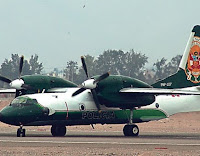
Yesterday, a plane was stopped at Pucallpa airport (East Peru jungle city) on its way to Lima. The local customs officials had previously got an anonymous tip-off that the plane was carrying contraband from the jungle, and thus it proved: the plane was carrying 9,000 m3 of virgin mahogany, lumber that is totally banned from logging, no doubts, no flim-flam, no second-guessing. But the cutest thing about it all was the plane is a Peru National Police Force (PNP) Aircraft, with PNP pilots, livery and the whole caboodle. Here's a photo of the plane itself on the tarmac at Pucallpa yesterday afternoon.

Hey boss! It's da plane!

A guy in Lima named 'Erick Arroyo' is the client for said lumber, owner of a company called Mi Sueño' (My Dream). We know the names of the aircraft crew, too (Rafael Fernando Ríos Zavala, José Bardales Rengifo, Oscar Bazalar Román, all police officers). The Commander and the General that command these officers are also now under investigation. It remains to be seen whether Peru will actually bother to prosecute its own corrupt functionaries for once, colour me sceptical and all that. As for the jungle and trees, with the law-enforcers up to their necks in this crime is it any wonder that nobody is ever punished in Peru for this environmental rape?

Thursday, February 5, 2009

The Monterrico Torturers: Peru's Congress will lay the blame on the company


Ooh, lordy! Dana Ford at Reuters Lima has just filed a great note about the Monterrico torture case, and you can read it below. If, as seems to be the case, the blame is being settled on the heads of the privately contracted security company (now owned by Swiss group Securitas) by the Peruvian Congressional enquiry, this mean Monterrico (MNA.L) is well and truly on the hook for the things that took place inside its grounds in August 2005. As contractor, it is directly responsible for their actions, y'see.

Last time I looked MNA.L stock was trading at 44p or so in London. Take 40p or so away from that price in the very near future. Hey Bristow, you and your disgusting company are toast, you pig.

xxxxxxxxxxxxxxxxxxxxxxxxxxxxxxxxxxxxxxxxxxxxxxxxxxxxxxxxxxxxxxxxxxxxxxxxxxx
Peru mining security firm faces investigation

By Dana Ford
LIMA, Feb 5 (Reuters) - A Peruvian security company that works for some major international mining firms faces a congressional investigation after human rights groups accused it of beating and abusing protesters in 2005 at a site it guarded.

Recently published photos of alleged beatings of protesters caused an uproar in Peru, a leading metals exporter, where remote mines guarded by private security firms are often targets for demonstrations over the social and environmental impacts of mining.

Last month, the National Coordinating Committee for Human Rights, a leading non-governmental rights group, published photographs of men and women allegedly beaten by guards and police after a 2005 protest at the Rio Blanco mining project.

The $1.4 billion development was protected by Forza, one of Peru's largest security companies.

"The photos clearly show that personnel of Forza played an active role in the repression and torture," said Javier Jahncke at Fedepaz, another rights group that joined the National Coordinating Committee in filing a complaint on the case.

The National Coordinating Committee said the photos were sent by an anonymous whistleblower. One shows a man bleeding from his neck and another shows the same man a day later, dead.

Peru's Congress said it would open an inquiry into whether crimes were committed by police and private security forces in response to a protest. Public prosecutors are already conducting their own investigation.

Forza's press office referred Reuters to Switzerland's Securitas which bought the Peruvian company in 2007, but an official there said Forza was in charge of handling inquiries. Reuters again contacted Forza, which declined to comment.

The images show protesters caked in blood, with hands tied behind their backs and plastic bags over their heads. A man in an orange vest with "Forza" printed on it poses in one shot, holding a gun and staring at the camera.

The mining project is owned by Monterrico Metals , which was bought by China's Zijin in 2007.

Monterrico's investor relations manager, Andrew Bristow, was not available for comment. But when the photographs first emerged, he said the allegations were the latest in a long list of "opposition activity" meant to derail the project.

Forza, whose clients also include major energy firms, has been investigated on a similar complaint once before, but the government dropped the case due to a lack of evidence.

Police work is underfunded in Peru and nearly nonexistent in remote areas where foreign mining companies work.

Private firms fill the void, often hiring current or former police and military personnel. Rights groups say they go beyond the law in enforcing security.

"Where there are no police, private security companies act like the police," said Jahncke "In many cases, they push past the limit of what is legal."

Peru has 92,000 police officers and 100,000 people who work in private security, according to a 2008 United Nations study.

Ricardo Ganiku Furugen, who heads the government agency that oversees private security firms, said he is waiting for public prosecutors to finish their investigation before deciding on whether to revoke Forza's work permit.

"The final report will come to us and we will see then if the situation demands cancellation of the contract," he said. (Editing by Fiona Ortiz and Kieran Murray)
dana.ford@thomsonreuters.com;
xxxxxxxxxxxxxxxxxxxxxxxxxxxxxxxxxxxxxxxxxxxxxxxxxxxxxxxxxxxxxxxxxxxxxxxxx

Friday, January 16, 2009

The Monterrico Metals Torturers: Bad news Bristow, this case is not going away

Bristow, we don't like you very much.

Two developments to report, with thanks due to regular reader Matt for the headsup.

1. On Peru's CNR radio this morning, Andrew Bristow (Monterrico Metal's IR person and glorious piece of shit) said the following:

"I am not going to go into this situation (story), it doesn't seem appropriate to me. Anybody can make accusations of any type and I'm not going to get into some kind of media debate about it..... I'm not going to participate. I repeat, the company Río Blanco Copper will have to make a decision (first)."

All this was connected with the clear case of torture we've covered here over the last week (see below for previous posts). It was also connected with declarations made by the journalist Julio Vásquez who was kidnapped along with the 28 indigenous locals. Vásquez said on the program that while being held and tortured at Majaz (now called Río Blanco) for the three days, he heard one of the Majaz people say that they were tortured "on orders from Bristow", who was at the time operations manager at the mine.

2. Today Otto received the following e-mail (via the kind Matt) from the Human Rights National Coordinator of Peru (CNDDHH). It also came with a very interesting attachment that you can access yourself by clicking right here.

The good news is that CNDDHH (who is the bigboy Peru national body...this is not some scrawny NGO people, these people are the real deal) is sending a representative over to London next week to spread the word about the disgusting Monterrico Metals and their torture tactics in Peru. This story is not going away, Bristow (and I already know you read the blog, you fat slob. Otto got good spies).

Here's the mail in full; feel free to contact Baraybar on the mail address provided.

xxxxxxxxxxxxxxxxxxxxxxxxxxxxxxxxxxxxxxxxxxxxxxxxxxxxxxxxxxxxxxxxxxxxxxxxxxxxxxxxxxxxxxx

Dear Friends:

I am writing you from the Human Rights National Coordinator of Peru; a non profit organization who works on the protection of the human rights in our country. I’m writing in regard of the latest event’s in the “Majaz Case”, where some security officers of the Majaz Mine and a group of Peruvian police officers tortured a group of peaseants.

Please, find enclosed the letter that the Executive Secretary of our organization are sending to many internationals institutions in the effort of showing to the International comunitee this emblematic case.

Also, we hope you can express your concern about the problem of the torture, and the importance of an in-depth investigation in the case we have made reference in the letter enclosed, to the Peruvian authorities.

One of our collegues, Mr. Juan Pablo Baraybar from the Peruvian Equipment of Forensic Anthropology (EPAF)will be in London during next days. For further information you can contact him at baraybar(AT)epafperu.org

Yours Sincerely,

Carmela Chávez Irigoyen
Responsible of International Affairs
Human Rights National Coordinator of Peru
Phone: 00511 419 1111 extension 111 / 00511 9 9995 3745 (cel phone)

Fax: 0051 1 419 1112
Address: Pezet y Monel (antes Tupac Amaru) 2467 Lince Lima – Perú
www.dhperu.org

Bullying journalists: This one is unlikely to pop up on Fox News Americas

Raul Weiner and his gagging order (photo courtesy of 'La Primera')

In November 2008, the journalist Raul Weiner of Peru's daily paper "La Primera" ran a story about how 13 members of left-wing organizations were being investigated by police for connections to the Colombian FARC (yep, it's that magic laptop again, the one with zero e-mails and planted photos). We're not talking illegal groups here, but heads of established social bodies such as unions and recognized committees. All were being threatened with custody under the same type of vague anti-terrorism legislation now used in the serious countries as the latent bullyboy threat to anybody that dare criticize governments too much or to loudly.

Cut to this week, and Raul Weiner was summoned by Peru's judiciary to defend himself against the very same charges of "crimes against the public peace" and "terrorism", simply because he dared to do his job and tell people what was going on. Weiner was served with the order to attend on Tuesday and his hearing was yesterday, but true to form we do not know and will not know what happened in the courtroom because a gagging order was slapped on proceedings due to "reasons of national security". If this guy is a terrorist, we may as well all go to our local police station right now, form an orderly queue and turn ourselves in. He got wind of a story, he reported on it. The government didn't like the fact that its shady undercover games were made public. The government tries to shut his mouth. That's what's going on here, pure and simple.

Yet again, if all this had happened in Venezuela you'd know about it in realtime on fifty-seven channels, Bruce. But as it's happening in Peru and against a left-wing newspaper the only link in English to this story comes from 'Reporters Without Borders', doing its good, non-partisan work as usual.

Saturday, January 10, 2009

Monterrico Metals: How Peru's Police and British miners use torture to control populations

Richard Ralph. An good example of colonial scum.

In early 2007 Monterrico Metals was taken over by Chinese metals company Zijin Mining Group. I want to say that first and foremost because this story is not about some dastardley story of Chinese suppression. In fact the Chinese of Zijin are fair corporate citizens that have suffered under the weight of the previous owners of Monterrico, the British. It's also the story of how the Peruvian government betrays and lies to its own people in order to continue with its "growth at all costs" policies.

"The Brits, Otto?", I hear you asking. Yep, the Brits. To prove that the British aren't all the sporting fair play they're cracked up to be, here comes a report on how they, along with Peru's loving and caring National Police in cahoots with the Mining Ministry, treated Peruvian locals who protested against their mining development of Majaz (now re-named Rio Blanco) in 2005. These Brits also include the then British Ambassador to Peru, an ungodly shit named Richard Ralph who was later caught insider-trading Monterrico stock in 2007 and fined £117,691. In the press release about the insider deals there is this passage about Ralph;

"The fact that a British Ambassador working in Peru finishes by being a high executive in a mining company and using all his contacts demonstrates the low moral character of these people and is evidence as to how this type of company is managed."

Indeed. So on to the main story. In August 2005, a group of locals claimed that they had been victims of violence and torture when they staged a pacific protest at the British-owned Monterrico's project at Majaz. The company has always denied these claims, even when independent doctors reported in June 2008 that the locals were telling the truth and had clearly been tortured. But yesterday, January 9th 2009, a development occurred. The National Coordinator of Human Rights in Peru (serious people) published photos obtained of the illegal detention and torture of the group of indigenous. Below find the whole story (translated by me) and photos of what happened that look like something out of an improvised Guantanamo.

So read on, people. Remember that since being taken over by the Chinese, Monterrico has basically been a good corporate citizen in Peru. What you're going to read is how a British mining company that includes a crooked ambassador to the country in question enjoys treating their South American hosts. And remember the whole trap was set up by the Peruvian Ministry of Energy and Mines that lied about a high level commission being set up for the locals and then set their police force attack dogs on the group.

Viva investment grade. Viva, viva, viva.

xxxxxxxxxxxxxxxxxxxxxxxxxxxxxxxxxxxxxxxxxxxxxxxxxxxxxxxxxxxxxxxxxxxxxxxxxxxxxxxxxxxx


Since 2003 the mining company Majaz, today named Rio Blanco, operated in an irregular manner in the territory of the rural communities Segunda y Cajas and Yanta, in the northern frontier of Peru. The presence of the mining company is irregular as it did not have the consent of the two thirds majority of communal assembly as required by the law 26505, as noted by the People's Defence ombudsman (report 001-2006/ASPMA-MA). For two years the communities affected tried to use channels of dialogue with the State to demand the respect of their territorial rights, without any success.

At the end of July 2005 the communities began a peaceful march towards the mining camp where, according to an offer from the Ministry of Energy and Mines, they were to meet with a high level multisectoral commission. The communities have noted on many occasions that it was a very difficult march, because it implied walking for several days through dense vegetation in extreme climatic conditions.

On arriving at the mining camp on August 1st 2005, the group was not received by the anticipated commission for dialogue, but instead a large police contingent that brutally repressed them, throwing tear gas canisters from helicopters and firing live rounds at the people, even when they were fleeing.

Under these circumstances 29 people, including two women and the journalist Julio Vázquez Calle, were apprehended and taken inside the mining camp. They were held there for three days and were submitted to various forms of psychological and physical torture. As well as being savagely beaten, in those three days they were kept blindfolded by bags sprinkled with tear-inducing powder and with their eyes bandaged. They were also deprived of warm clothing despite the low temperatures.

According to the testimonies of the group, from time to time a toxic powder was put on their faces under the bags and bandages that made them vomit and did not let them breathe properly. The women were subjected to diverse sexual assaults. Also, they were all inflicted with diverse verbal humiliations and threats.

In October 2007 the US institute 'Physicians For Human Rights' (recipients of the 1997 Nobel Peace Prize) performed examinations on eight of the tortured people and confirmed the abuses they had suffered during their illegal detention.

The responsibles
The responsibility for these occurances lies with various members of the Peruvian National Police Force that directly participated in the illegal actions and also the security personnel of the company Minera Majaz that directly intervened in the occurances. The tortures happened in the interior of the mining camp.

The denouncement
In July 2008 the National Coordinator of Human Rights in Peru (Coordinadora Nacional de Derechos Humanos (CNDDHH)) and the Ecumenic Foundation for Development and Peace (Fundación Ecuménica para el Desarrollo y la Paz (Fedepaz)) presented a denouncement of the occurances to the Penal Authorities of Piura (Quinta Fiscalía Provincial Penal de Piura) (North Peru).

The report contained the charges of aggravated sequestration, tortures and crimes against the person. Among the methods of torture included in the report were aggression with tear gas, exposure to toxic substances, beatings, asphyxia, being kept bound in forced position for long periods of time, prolonged exposure to cold, denial of water and food, death threats etc.

Additionally, the procurator fiscal who was present during the group's detention, Félix Toledo Leiva, has been charged with the crime of omission of exercise of penal action, as he was fully aware of the abuses committed and far from promoting penal action against the perpetrators he denounced the victims for their part in the peaceful march.

The doctor who examined the tortured people has also been charged with the crime of expedition of false medcal certificates, as he did not affirm the evidence of tortures presented to him. This report is the origin of investigation 214-2008 of the Penal Authorities of Piura (Quinta Fiscalía Provincial Penal de Piura). To date, the Public Ministry has been taking declarations from the victims.

The Photographs of the Horror
A few days ago, the National Coordinator of Human Rights in Peru was given access to a group of photographs, handed in anonymously, that corroborate the allegations of torture reported by the community group.


The photos shows diverse moments in the occurances in the Majaz mining camp. In the photos the belongings confiscated by the police including clothing, food and cooking equipment can be seen. Of course there are no armaments which accredits the peaceful character of the community's march.

The images reveal, without a shadow of doubt, different signs of ill-treatment to the group that participated in the difficult march. Bloodied faces with contusions and haematomas product of repressive actions. People with no shoes and bare backs, herded together, bound and blindfolded in the interior of the mining camp.

The images also show how the group was kept with their heads covered by plastic bags that contained tear-inducing powder that as well as producing severe burns did not allow them to breathe (according to the testimony of the victims held under these conditions). In such circumstances they were transferred to different points inside the mining camp installations where they were held hostage.

The National Coordinator of Human Rights in Peru strongly condemns the acts of torture and abuse against the communities of Ayabaca and Huancabamba who appear undoubtedly accredited in the published photos. We invoke the authorities to rigorously sanction according to law the responsibles for these terrible acts.

The Death of Melanio

The march against the Majaz mining company also had by way of tragic result the death of the community member Melanio García. In these exclusive photos we see Melanio García after being shot but still alive on August 1st in plain day. The photo shows a bandage that covers the region of the wound and the expression of pain of the community member.


The circumstances of the death of the community member must be seriously investigated. Above all because the autopsy examination reported the death of Melanio García on August 2nd, product of a hemorrage cause by the bullet wound. And also becasue the photos taken on August 2nd register the body of Melanio, who on this date was in police custody, in another place and in a distinct position (lying back down on a sack).


UPDATE:
For more information on Majaz 2005 and the report from the medical team in 2008, click here and open the English language Word document second from the top.

UPDATE 2: More important testimony at this link, translated by Lillie at Memory in Latin America. Good job Lillie.


Saturday, January 3, 2009

Riddle me this one

"Allow me to help you with your bags, sir."

Guess what happens when you:
  • train some guy up for a couple of years
  • then put him (or her, obviously, but frankly it's more likely to be a him) in a uniform
  • give him impressive powers to detain/arrest/search people
  • let him legally break into places and look at whatever he wants
  • give him a big gun with a holster to show it off to the world with
But then pay him U$250 for 240 hours of work per month? (And yes, that says two hundred and fifty dollars a month)

In the latest Ipsos/Apoyo report on corruption in Peru, 68% of people that responded said that police were "corruptable" (i.e. ready to take a bribe). It also puts the police as the second most corrupt body in Peru, just behind the judiciary (and there's just one degree of separation there, too).

This report (you can link through to it here...the link that says "ver nota de prensa") came before Interior Minister Remigio Hernani revealed that 246 police officers had been put under suspicion of gasoline theft due to the investigative operation his bureau started on October 1st. He did dismiss talk that three-quarters the $150m in fuel assigned to the police forces was being sold on the black market, but did say that of the 59 control operations that the Interior Ministry had run, 15 had turned up police officers siphoning off fuel and selling it. So if they manage to turn up 246 bent cops in the first place they decide to check, how many officers will be left on the street if they really start asking around? Chances are the figure will be floating around the 32% mark, no?

The solution is for the national government to start respecting its police force. That means it should be moved into a higher pay bracket. You know what happens when you pay peanuts, yeah?

Thursday, January 1, 2009

Definitely not suspicious at all...oh no

On December 29th, Panama's Public Ministry (equivalent of State Dep't in the US, I suppose*) announced the country's police force had stopped a band of drugs runners. In the operation one Colombian national died from bullet wounds in the shoot-out with police and two other Colombians were arrested. A total of "at least 250kg of cocaine" was also seized in the raid. All in all it looked like a goodly sized win for the whitehats in the ongoing LatAm cops'n'robbers cocaine game.

Then today, police announced that there were six arrests, not three. All six, including the dead person, are Panamanian nationals, not Colombians. And the haul from the raid was just 132kg of cocaine and 5kg of heroin. To give you a visual idea, this is what 51kg of cocaine looks like (a photo I found from a 2007 seizure in Kentucky, USA).


What are we looking at here? That to me looks like 20kg per grip bag, more or less. So 137kg of drugs is seven bags' worth, and 250kg is 12 or 13 bags' worth. You want to tell me that a professional drugs-fighting squad can mistake "at least 250kg" for an eventual 137kg total in drugs? Or let's put it another way: Do you, kind and gentle reader, have any trouble in telling the difference between the volumes of three sacks of cement and six sacks of cement? These people are kidding us, right?

This is the way the DEA hold themselves accountable in the ongoing "war against drugs", by the way. The DEA has controlled (cough, splutter, ahem) this drugs trafficking route since Noriega's time. Keep blaming the Axis of Evo, boyz.


*UPDATE AND CORRECTION: RG at Mexfiles know better and informs that the equivalent is the US Attorney General's office. Thanks for the correction.

Saturday, November 29, 2008

Peru, Mexico, cocaine and quote-of-the-week

The Mex Files has spotted the obvious fault in Peru's President Twobreakfasts' bright idea to haul over a bunch of Mexican police officers to help their fight against drug traffickers. Over 50% of Mexican police officers are officially labelled "not recommended" by their own government! But this hasn't gone un-noticed in Peru either, and Peru's ex-Veep Carlos Basombrío wins this week's toppy top quote award. It is a little harsh on Evo's crew, but all the same it must be given a wider audience:

"Asking Mexico for anti-narcotics police officers is like asking Bolivia to send us naval advisors."

Nuff said.

Y'know, Twobreakfasts has a reputation of being worldly smart and the bearer of wise saws and modern instances*. It's at times like these he lets down his image and shows himself to be just as big a dick as the rest of us.

*check yer Shakespeare, dude

Wednesday, November 5, 2008

Where's Waldo? (Peru Edition): The joke continues


Hey, remember all that thing about the big Petroperu corruption scandal and the politico dude Romulo Leon who decided to run away instead of answer to authorities about the backhanders he was caught on tape admitting? Well amazingly enough after a full month he's still on the run.

So today the Peru gov't have slapped a one hundred thousand Nuevo Sol bounty on Romulo's tush (that's about U$33k and a lot of money for a non-politico in Peru). Or in other words, the gov't and Police are either too corrupt or too stupid to find him for themselves (probably both). To give you an idea, dearest reader, there was a classic line from the absolute toppy top head chief honcho of police last week. When asked "Where's Waldo" he replied


That's a direct quote. You cannot make this shit up. Oh my how I love Latin America... wouldn't live anywhere else if you paid me.

Saturday, October 4, 2008

Man arrested on corruption charges, Geneva Convention smashed to bits, Red Cross packages needed a.s.a.p

Baduel shows off his expertise at "scissors, stone, paper"

Some dude name Baduel got arrested in Venezuela. To jog memories, this is an army guy who supported Chávez for a long time (and according to urban legend was a key figure in saving Chávez in the coup d'etat of 2002), but has since turned against Hugo and become a vociferous opposer. General Raul Isaias Baduel (for it is he) is being charged with corruption (the investigation has been going on for quite some time), but with a ton of non-surprise it's being made into a political prisoner police state human rights story by the anti-Chávez brigade.

Let's see what kind of evidence is stacked against the guy before rushing to judgement, because the rabid right is populated by some real nutbars who just want trouble at any cost. Relax....breathe deeply....don't believe the hype on either side....lotus position...ommmmmm. Worth noting that he's out on bail already (though not allowed to leave the country). Not exactly Lubianka detention centre style, is it?


Is that Blue Steel or El Tigre, Yon?

In other news, the ridiculous Yon Goicochea has made headlines because of a temper tantrum he threw about having his passport photocopied "BY AUTHORITIES" as he entered the country this week (nice to have the money to travel, Yon). This one made me laugh out loud as I tried to remember just how many times my own passport has been photocopied in the last decade or so by 'authorities' over the length and breadth of LatAm. I'd guess it'd be in the hundreds of times without a second's hesitation. This Yon guy really and truly needs to grow the f*** up for once.